
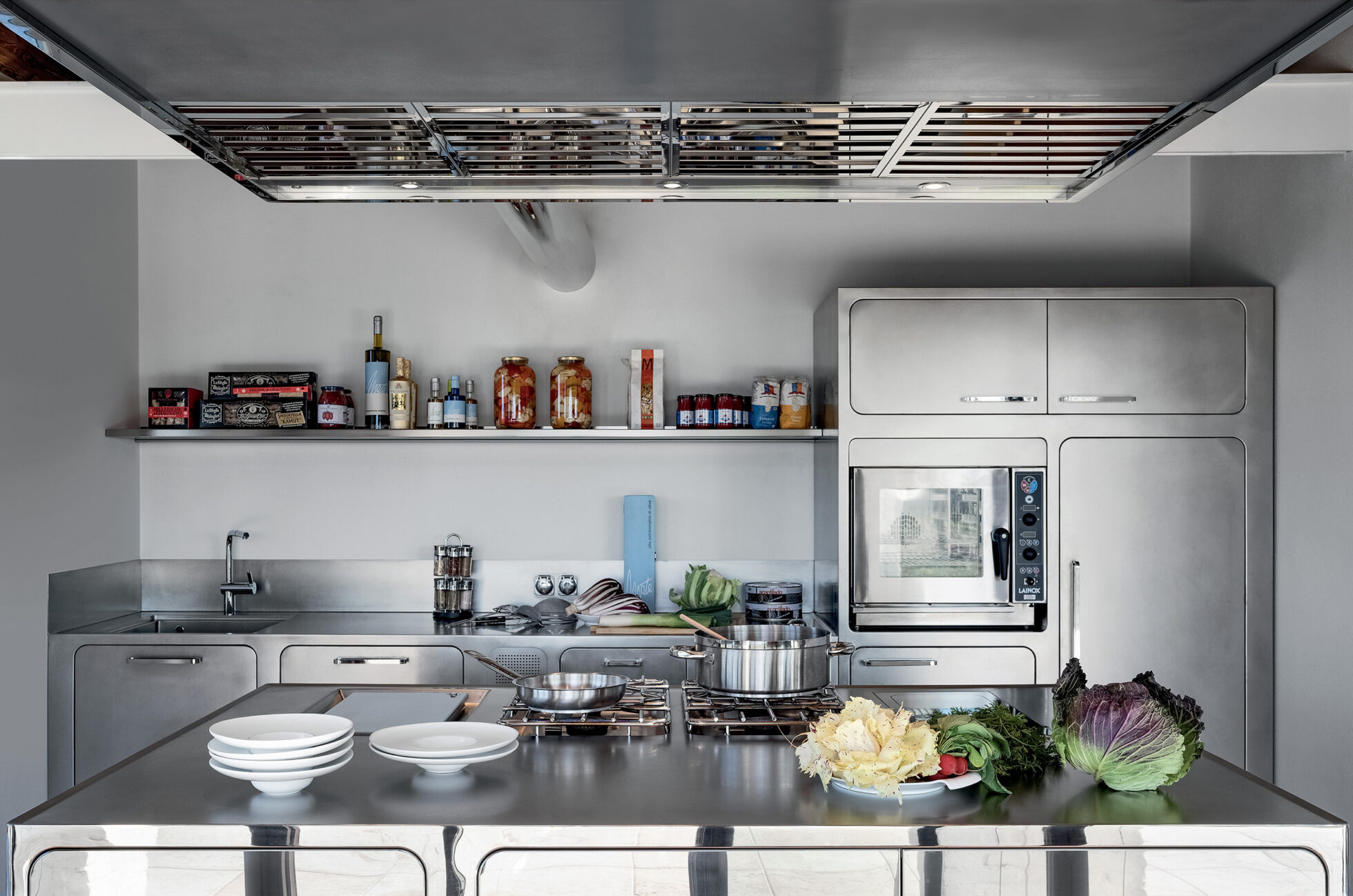
In the kitchen, hygiene and safety are crucial factors that must not be overlooked. We must always strive to improve these two aspects to make the kitchen environment a perfect place for preparing meals.
Increasing hygiene and food safety means combining maintenance care, kitchen cleaning, and personal hygiene—not only to prevent food contamination but also, and above all, to avoid an increase in bacterial load, which could put our health at risk.
To increase hygiene and safety in the kitchen, multiple factors must be taken into consideration, and very specific rules must be followed. Let’s find out what they are together.
In the kitchen area, “hygiene” is synonymous with “efficiency”.
In fact, only in a clean and hygienic environment is it possible to work while guaranteeing food safety and creating delicious dishes, ensuring that raw ingredients are stored correctly, thus always guaranteeing fresh food while preserving its flavor and integrity.
There are 5 fundamental rules to increase hygiene and safety in the kitchen:
The best recipes come from the clever use of ingredients and the proper storage of food products. In this regard, it is necessary to handle the correct separation of foods.
To start on the right foot, we advise you to always check the food storage instructions and the expiration date on the packaging.
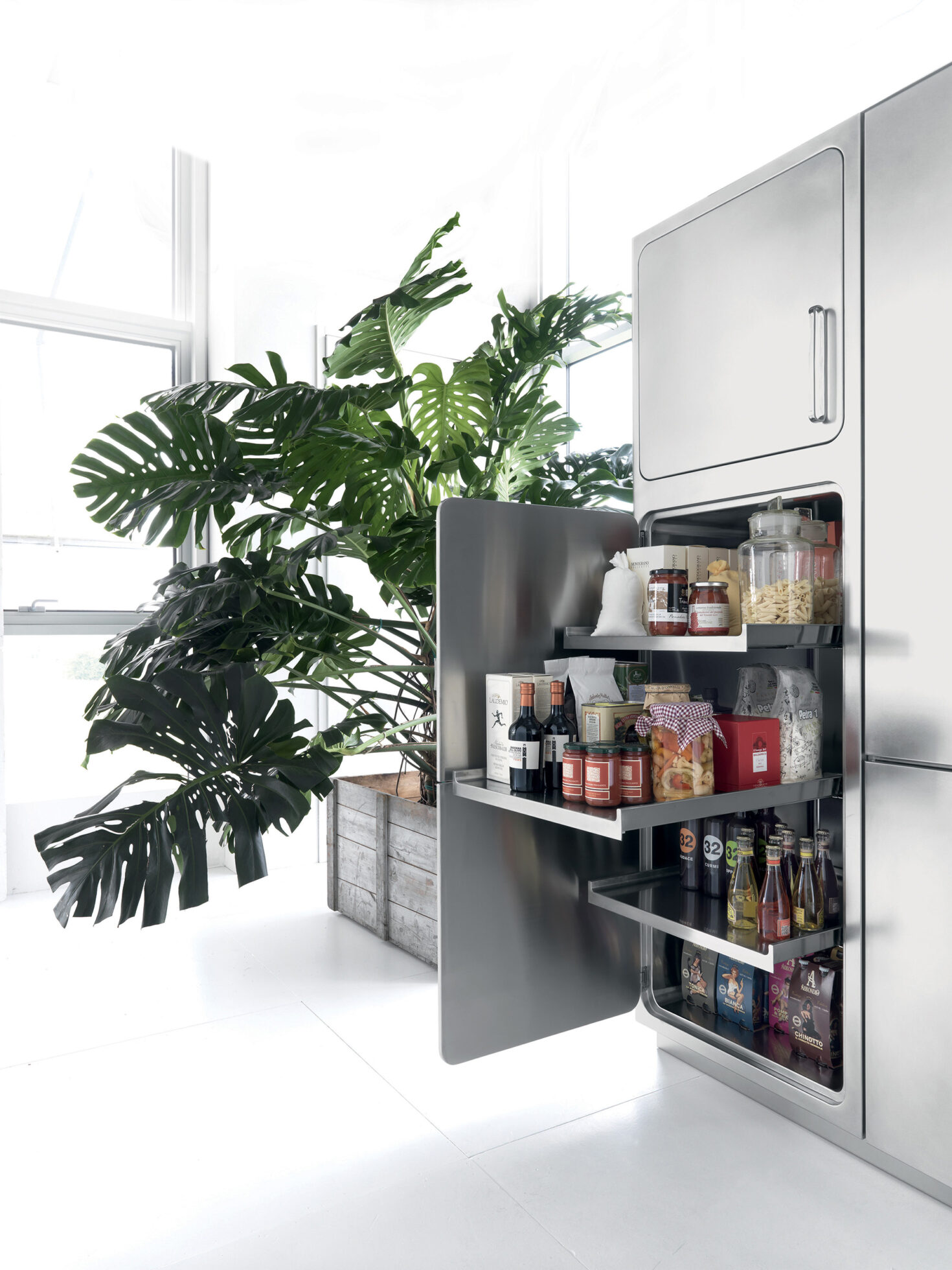
Next, you need to separate cooked, dry, and fresh foods. Dry foods should be placed in wall units and pull-out larders, as well as spacious compartments that are ideal for preserving the product and, above all, guaranteeing order and space optimization. Some fresh foods must be placed in the refrigerator, as they are subject to rapid spoilage.
As for hot food, before placing it in the fridge, you must make sure it has cooled down completely. Putting food that is still hot into the refrigerator could cause it to spoil and, if consumed, lead to food poisoning. Cooked food should be stored in the fridge within 2 hours of cooking. To ensure optimal refrigeration, the refrigerator temperature should be set between 4°C and 6°C.
Remember that all foods must always be covered, because if left uncovered, they could be affected by germs and bacteria. Moreover, by wrapping food in protective film or placing it in containers, you will avoid cross-contamination, a term that will be explained in more detail below.
A categorical imperative: defrost each type of food correctly.
Frozen foods or those kept in the refrigerator should be defrosted in cold water, in the fridge, or in the microwave. If you do not use the most appropriate method, all perishable foods left to thaw for more than 2 hours will remain frozen in the middle while the outer surface begins to defrost, entering the so-called “danger zone”.
This is a zone whose temperature range, between 5°C and 65°C, promotes the rapid multiplication of potentially lethal bacteria. Therefore, it is advisable to defrost all frozen food by placing it on the bottom shelf of the refrigerator, under cold running water for less than an hour, or in the microwave using the “defrost” function.
Fresh fish and meat can be defrosted in cold water, making sure to change the water every half hour.
The kitchen must be thoroughly cleaned in every corner.
Every area of the kitchen requires impeccable maintenance and cleaning: starting from the cooktop and sink, which should be washed and dried at least once a day, down to the oven, which should be cleaned after use with hot water and dry cloths.
These are just some of the main areas of the kitchen. While the proper maintenance of workstations certainly plays a decisive role in terms of cleanliness and food safety, hygienically maintaining compartments, drawers, and pantries is equally important.
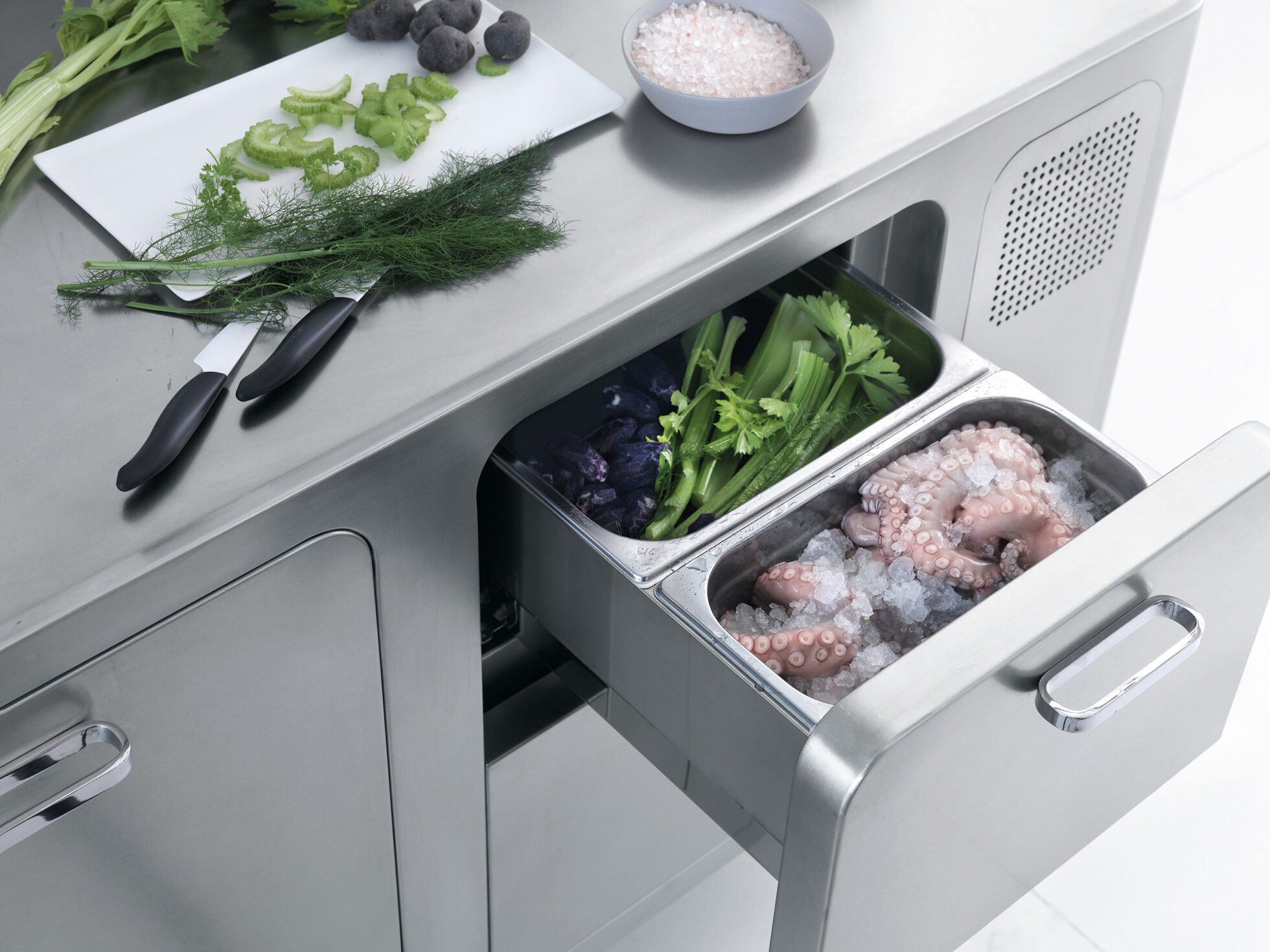
In this regard, to ensure easier and faster hygiene and cleaning routines, we recommend choosing modules with rounded corners. They are easier to clean because their shape allows for smoother movements, perfectly accommodating the direct action of sponges and cleaning products.
In fact, these types of modules feature standard dimensions set according to the Gastronorm modular system, which guarantees capacity and space optimization in the kitchen, even in the smallest layouts.
One final tip: thoroughly wash sponges, scouring pads, and brushes. To increase hygiene and safety in the kitchen, you must also pay close attention to details. If not kept clean, the tools used in the kitchen can become major sources of germs and bacteria.
Cross-contamination is one of the main causes of food poisoning and safety risks in the kitchen.
But what exactly is meant by cross-contamination? Let’s take a closer look at this important concept, which was mentioned earlier in the article.
This expression indicates a type of indirect food contamination due to the transfer of bacteria and germs from raw food onto utensils and workstations used for processing other types of food.
To avoid cross-contamination, it is necessary to adopt specific hygiene and safety measures.
First of all, you should always use separate cutting boards, workstations, and tools for processing different food ingredients, such as meat and fish, fresh foods, and cooked foods. Using the same utensils and surfaces carries potential health risks, such as poisoning and infections with serious consequences.
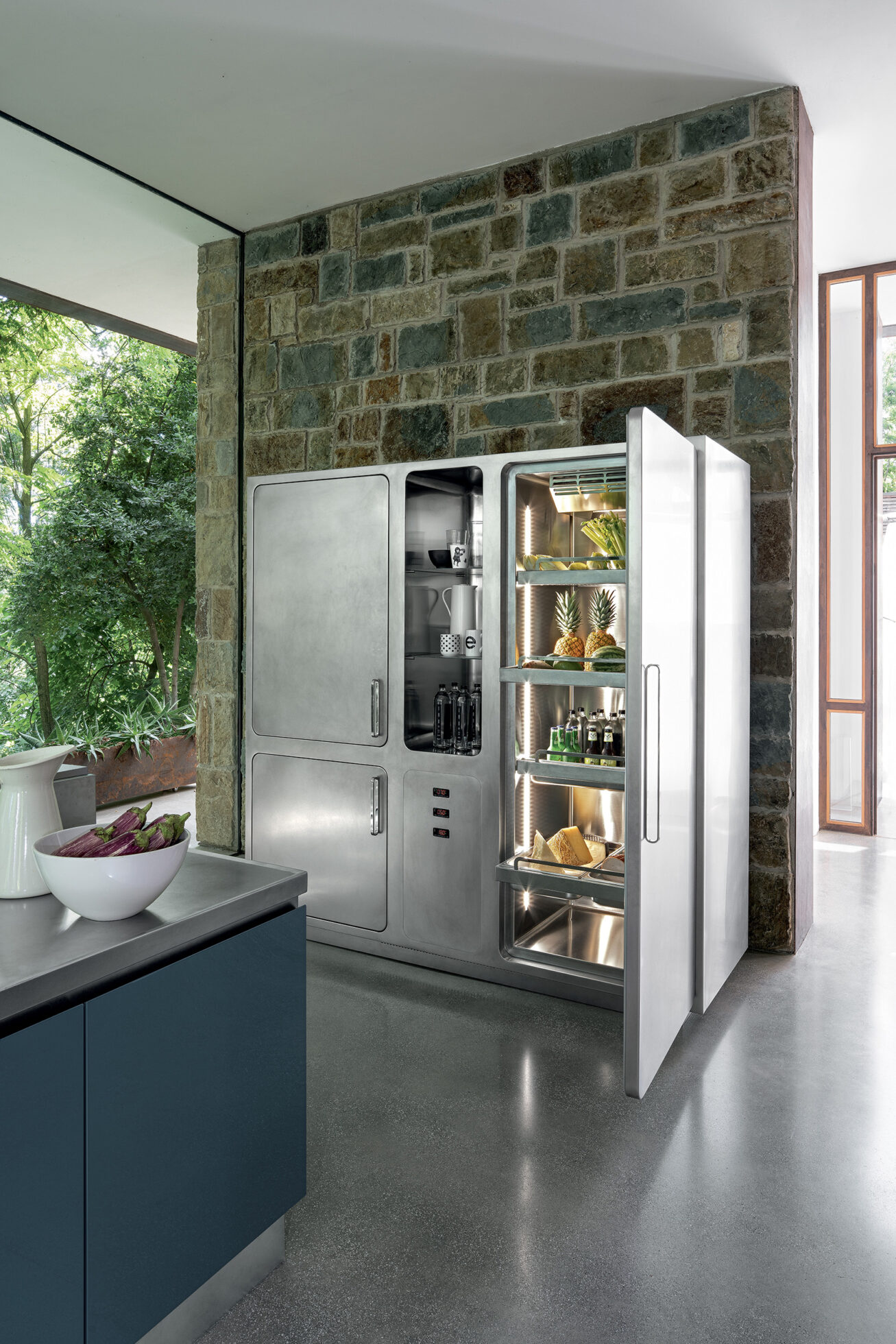
Avoiding cross-contamination also means maintaining proper food separation inside the refrigerator. For a professional and effective approach, we recommend choosing the Cold Control System, a guarantee of hygiene and safety for your kitchen.
This is a stainless steel refrigeration system that ensures effective food division and preservation. In fact, the system consists of separate columns and compartments refrigerated at different temperatures, tailored specifically to the preservation needs of each food.
Utensils, appliances, and by extension kitchens made of stainless steel always ensure flawless safety and hygiene. This is because stainless steel is a biologically neutral, durable, and highly hygienic material.
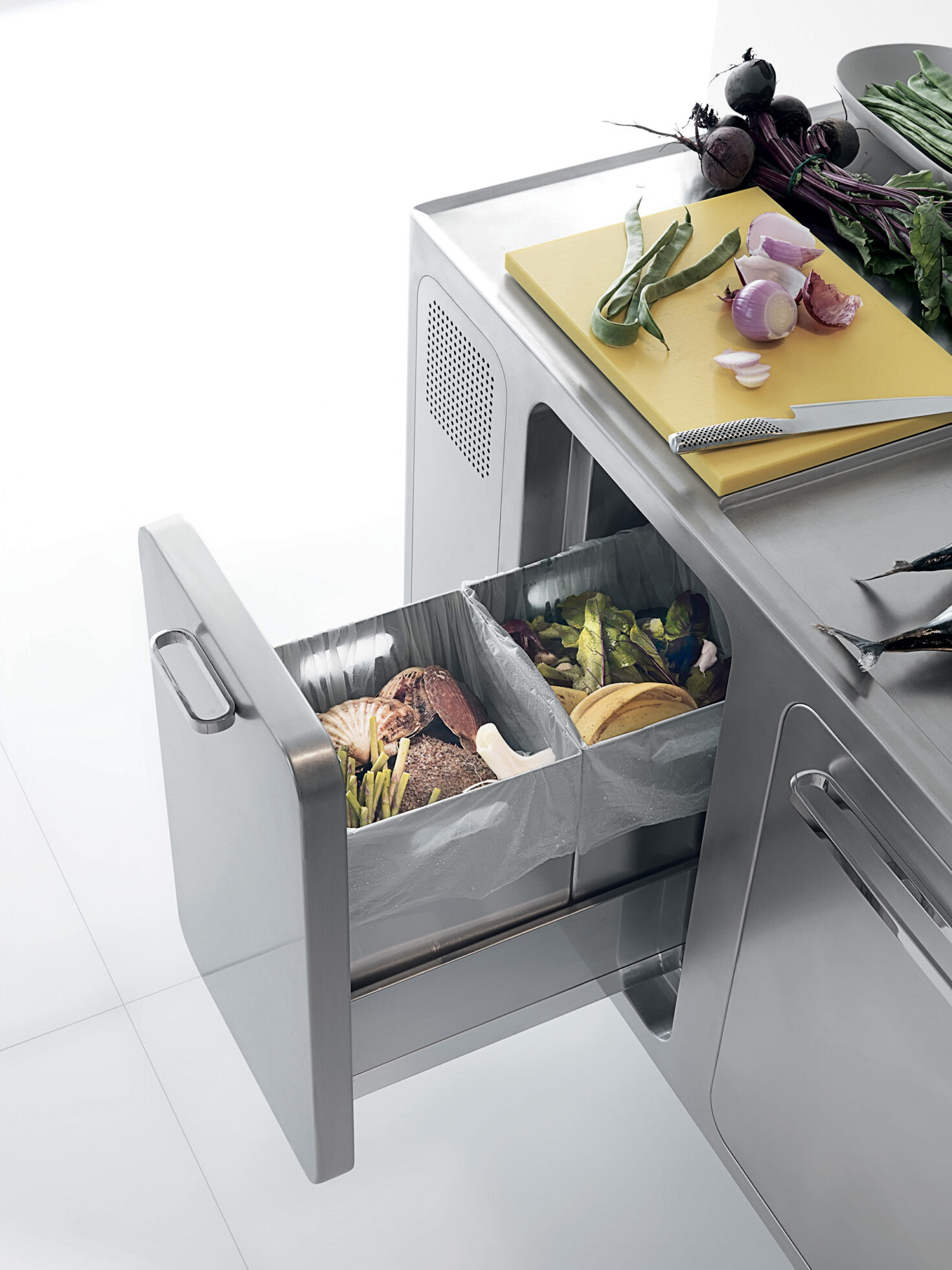
The proliferation of bacteria does not stop after cleaning the countertops and internal spaces of the kitchen; it continues to progress inside the waste bin.
In fact, waste, food scraps, and food waste—especially organic waste—become major bacterial sources and cause bad odors, inevitably compromising the hygienic integrity of your kitchen.
That is why we recommend using a refrigerated waste bin, in order to neutralize odors and prevent the rapid multiplication of germs. This is one of the technical features that define the profile of a safe, clean, and high-performing kitchen.
These are the 5 maxims of hygiene and safety to follow in the kitchen. We remind you that in addition to the usual kitchen maintenance and cleaning rituals, it is important to maintain personal hygiene; therefore, before diving into the cooking stages, make sure to wash your hands thoroughly.
It may seem like a trivial and obvious piece of advice, but it is precisely by starting with simple and useful steps that you can begin to improve hygienic conditions in the kitchen.
A constantly clean home environment is a guarantee of high hygiene and excellent performance.
Hygiene and safety form an inseparable duo that defines the character of your kitchen, making it a true “temple of food,” where care for the preservation of both raw ingredients and the entire environment is essential to ensure a high-quality final product.