
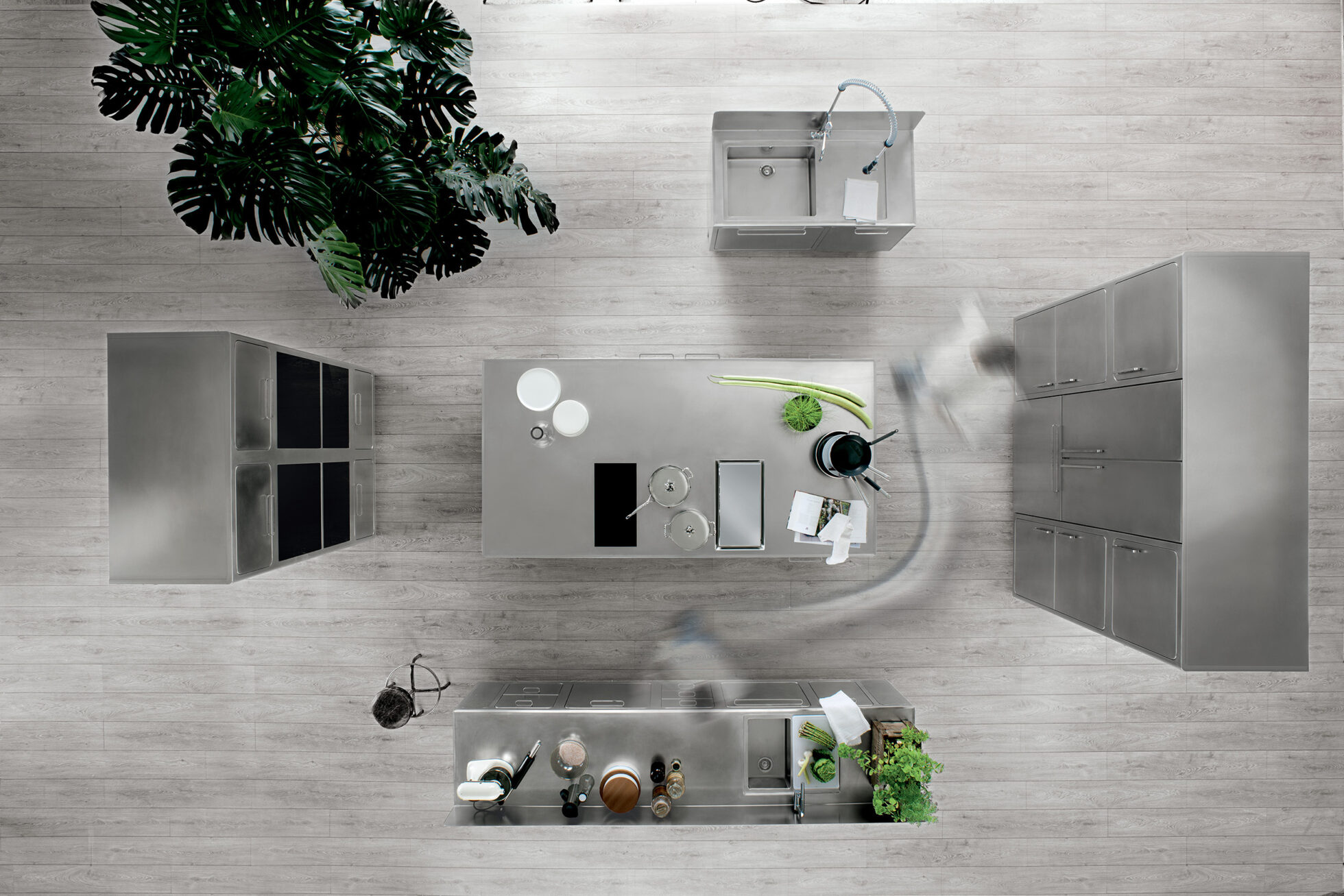
A passion for cooking can express itself through tradition, creativity, and innovation. However, what makes this art truly unique is professionalism, which requires specific skills combined with the use of appropriate tools and functional environments to carry out each stage of cooking comfortably and effectively.
Comfort, rationality, and the clever use of space are fundamental and essential aspects of a kitchen that decisively influence the entire food preparation process. In fact, creating a dish flawlessly results not only from selecting high-quality raw materials but, above all, from the correct execution of well-defined steps. Which ones? Let’s find out together.
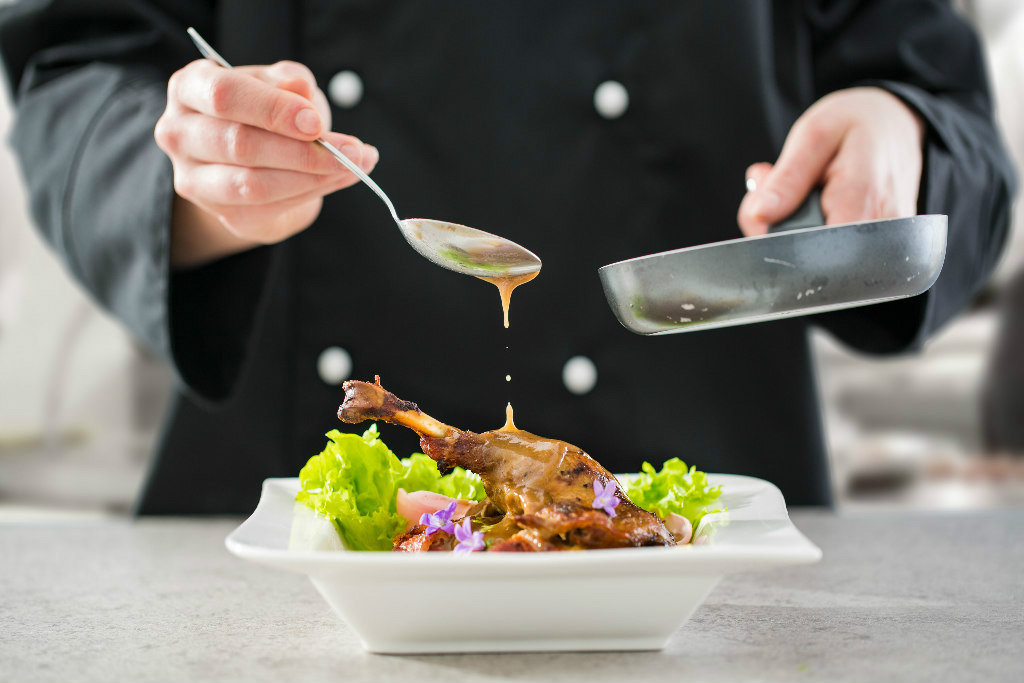
DDo you want to cook like a chef? To create dishes perfectly according to the rules of the art, these are the 5 key stages you should follow in the kitchen:
Working like a professional in the kitchen means paying due attention to each of these stages, thereby always guaranteeing quality, hygiene, and order.
Food storage requires special attention so that the flavor and freshness of the ingredients remain unaltered until the moment of service.
Taking care of food even before serving it is the first step toward a more conscious and professional approach in the kitchen. To prevent spoilage and extend shelf life, it is advisable to use room-temperature and/or cold pantries for storage.
Refrigeration, and eventually freezing, are the most widely used methods for preserving food, as they slow down the proliferation of bacteria, thus preserving the quality of the raw material. Knowledge of the characteristics and properties of food allows for better preservation.
One of the most common mistakes in the kitchen is keeping food products that need refrigeration outside the fridge, or conversely, storing products in the cold that shouldn’t be kept there.
Cold temperatures inevitably alter the texture and flavors of certain types of food, while in other cases, they preserve their freshness.
Here are the food products to store in the fridge:
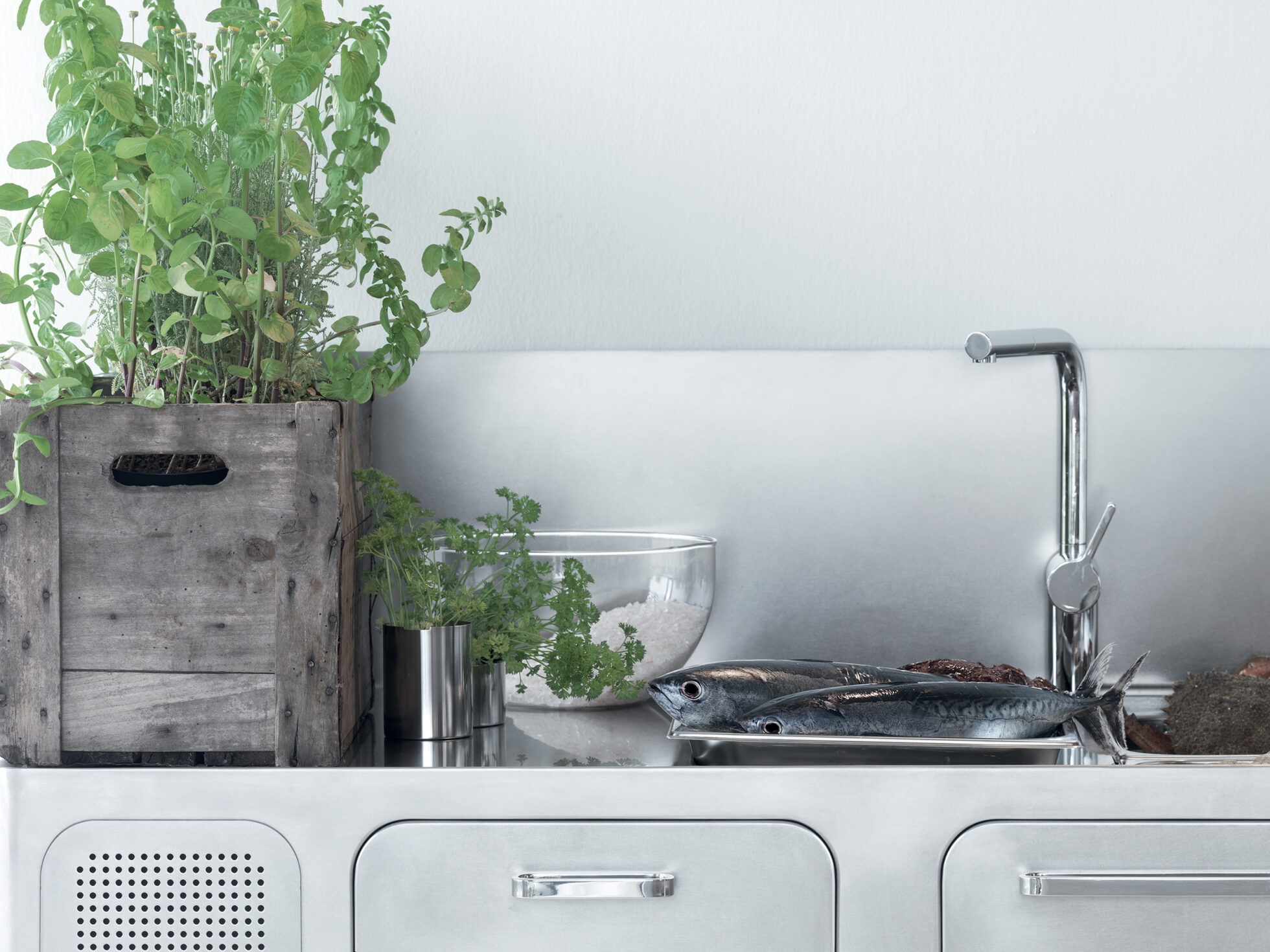
Tender and hardy herbs like parsley and rosemary, often used to garnish the dish with an aromatic touch, need to be washed thoroughly and then placed in the fridge to keep them from wilting.
Raw meat and fish
Meat and fish often reach even the kitchens of experts after undergoing a blast-chilling and/or dry-aging process in a cold room. This storage process, designed to prevent premature spoilage of the meat, should continue until the moment of consumption.
Desserts and semifreddi
With a texture halfway between ice cream and cake, semifreddi and spoon desserts must be stored in the refrigerator to prevent them from melting, so they can be served chilled and at the right consistency.
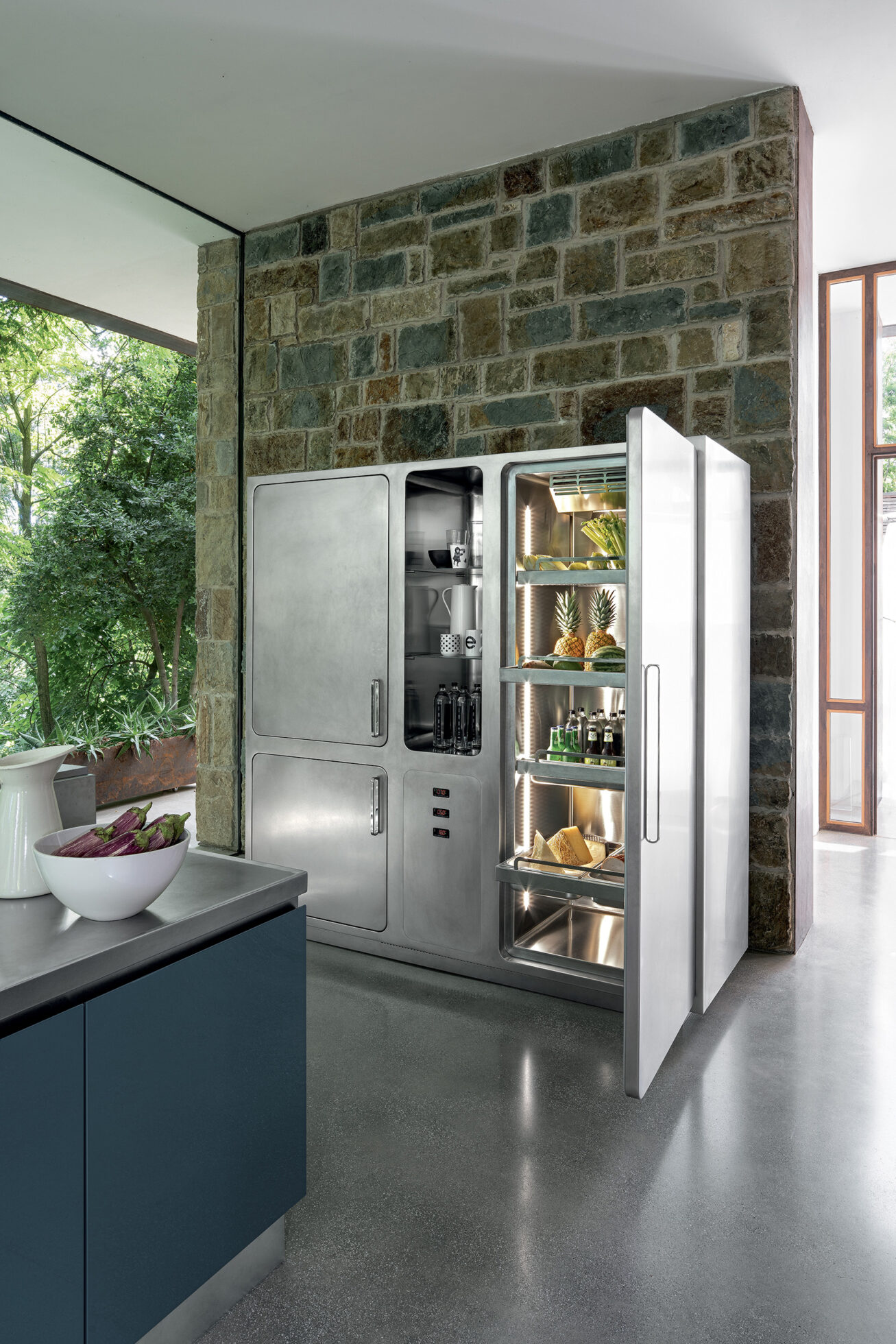
To guarantee optimally preserved food and products that are always served at the right temperature, a refrigerator designed with a cold control system would be extremely useful and effective.
This consists of an organized complex of separate compartments with different temperatures, each designed to house different types of food and thus prevent cross-contamination. Every compartment, easily removable and ready for use, is designed according to the standard dimensions of the Gastronorm modular system.
This system guarantees functionality and space optimization, following a dimensional line specifically tailored to optimize workflows in the kitchen.
Beyond knowing food preservation techniques, a professional must be able to make optimal use of kitchen surfaces and modules, providing pull-out and easily manageable shelves—all for greater capacity and order.
Food preparation requires the completion of multiple specific actions and steps. For this reason, it is necessary to arrange a dynamic and practical organization of the space and workstation to ensure a fluid and undisturbed flow of activities.
Having ingredients and tools close at hand is essential both for the correct execution of dishes and for optimizing preparation times. Functionality is the key to the success of a dish.
Being able to use stainless steel countertops for food processing and exploiting the space of large drawers and dedicated compartments to store utensils will enhance your performance in the kitchen.
Cooking like a chef means knowing how to move with confidence, making the most of the available space and putting your manual skills into practice naturally.
Choose a kitchen with a recessed toe kick—at the thickness you deem most appropriate—to facilitate movement and face the work stages with correct posture.
Cooking food is the stage where flavors are enhanced and ingredients are masterfully combined, guaranteeing delicious, new, and refined tastes.
This intermediate step is crucial in the preparation process. Food goes from the burners to the plate, risking a loss of flavor and texture due to a sudden drop in temperature; therefore, it is necessary to preserve the heat level of the dishes.
How?
By integrating a thermarium (plate warmer) into your kitchen to heat plates, ensuring warm dishes and service at the right temperature.
Manage spaces according to your needs: arrange the burners on the cooktop as you prefer, making customizations regarding the quantity you need and their spacing.
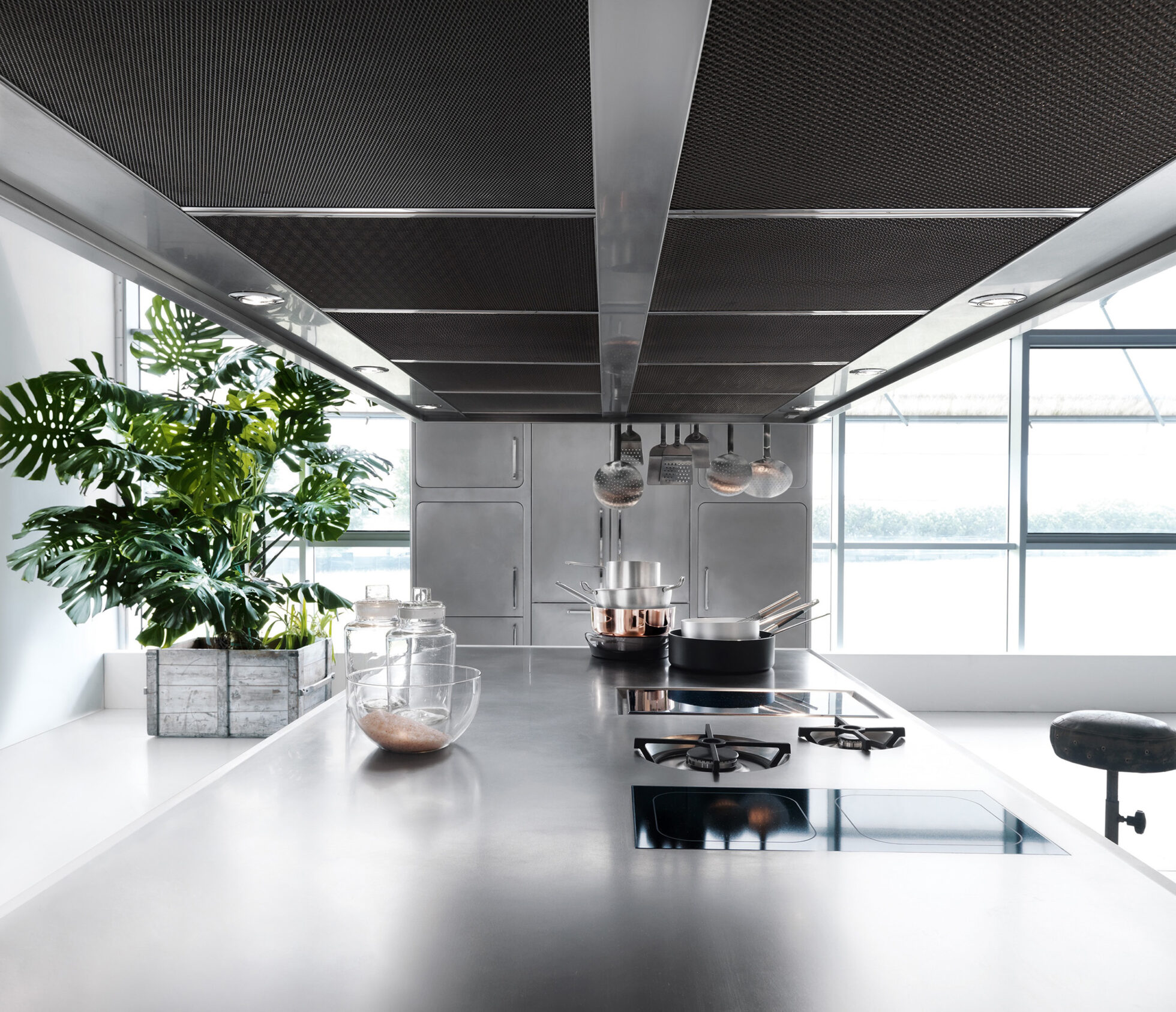
A professional’s kitchen stands out for its efficient, innovative equipment and utensils designed for specific food processing. To bring out the maximum taste and aroma of every ingredient, a true chef relies not only on their own skills but also chooses the specific tools for each food item and for different cooking techniques.
Pots and pans are available in a wide variety of materials, each presenting strengths and disadvantages related to their use.
Teflon pans: These are easy to wash, and their non-stick properties allow for cooking dishes with less fat. Teflon pans can be used for boiling, frying, and sautéing, as they are resistant to medium-high temperatures up to approximately 250°C.
The weak point of Teflon pans is the delicate coating, which immediately shows signs of wear and scratches when contact is made with sharp utensils.
Tinned copper pans: In addition to their great decorative appeal, they are used at a professional level because, as optimal conductors of heat, they ensure even cooking.
Copper requires precise maintenance care, from polishing to using tools on the tinned bottom, which must always be in excellent condition and free of wear. This is because prolonged contact with sharp and cutting utensils encourages the release of copper oxide, a highly poisonous substance.
Cast iron utensils: Frequently used in the kitchen, they lend themselves well to high temperatures and allow for effective, uniform cooking. However, cast iron is an alloy particularly prone to rusting, so it is important to choose an appropriate washing method. Furthermore, cast iron pots are particularly fragile, so they must be handled with care.
Enameled cast iron cookware: These stand out for their resistance to high temperatures, so much so that they are used in slow cooking and high-heat techniques, such as grilling and roasting. Enameled cast iron features optimal non-stick properties, with a single flaw: a delicate coating that is sensitive to deterioration.
Iron pots: Extremely robust, they are suitable for medium-long cooking at high temperatures. After washing, it is necessary to carefully dry the entire surface of iron cookware, as they tend to rust more easily compared to utensils made of other materials.
Aluminum: Another material used for professional kitchen pans, aluminum is a durable metal with good heat conduction properties, ideal for both short and long cooking. It is preferable to use aluminum pots treated with anodic oxidation. This prevents the harmful dispersion of chemical substances that could affect food, with dangerous consequences for health.
Earthenware/terracotta pots: Suitable for slow preparations at a constant temperature, this material features excellent non-stick properties but is simultaneously very fragile and prone to breaking due to impacts and drops.
Stainless steel: Last but not least, this is the most widely used material in the manufacturing of professional kitchen tools.
Stainless steel pans lend themselves to any cooking technique, particularly boiling. They are extraordinarily resistant and durable and do not require special maintenance care, aside from a thorough wash at the end of service.
Creativity and technique find full expression during the plating stage.
We eat with our eyes first, and an attractive presentation can make a dish more appealing before the first bite. A well-crafted dish, even aesthetically, stimulates the appetite at first sight, inviting a taste. That is why during the plating stage, you need to have every ingredient close at hand to immediately give shape to ideas for assembly and presentation.
Space organization is important in this step as well, and perhaps most of all. We advise keeping the necessary utensils handy for the moment of plating. Arrange tweezers, spatulas, and spoons on the workstation. Using these culinary tools will make every movement easier when arranging ingredients on the plate.
Also, remember knives and a cutting board, useful for slicing fresh food at the last minute to include in the recipe. Do not forget to keep containers holding spices and aromatic herbs next to the plate to add a final fragrant note.
If cooking is an art, knowing how to plate is a virtue. For impeccable plating, keep these simple tips in mind:
Cleaning the kitchen is the final stage, but no less important. A true professional always ensures the meticulous cleaning of every surface and compartment. Hygiene is vital in the kitchen: utensils, tableware, and workstations must always be washed with care to avoid the proliferation of germs, mold, and bacteria.
Only in an impeccably clean kitchen that guarantees the highest hygienic standards can food be handled and dishes of the highest quality be made. Cleaning a stainless steel kitchen deserves careful and specific attention. Steel is a resistant yet delicate material. For this reason, to avoid making surfaces dull and scratched, we advise against using metal scouring pads and abrasive detergents.
Instead, use specific products for stainless steel maintenance and microfiber cloths dampened with water and soap, or simply with non-abrasive products.
It is worth highlighting that stainless steel inherently possesses a high hygiene coefficient. It will be easier and more intuitive to clean a stainless steel kitchen equipped with rounded corners, as they allow the sanitizing product to penetrate deeply and reach the most difficult corners, facilitating cleaning operations.
Installing a refrigerated trash can would contribute decisively to hygienic maintenance in the kitchen by neutralizing bacterial load and the dispersion of bad odors—a feature that only a professional’s kitchen can boast.
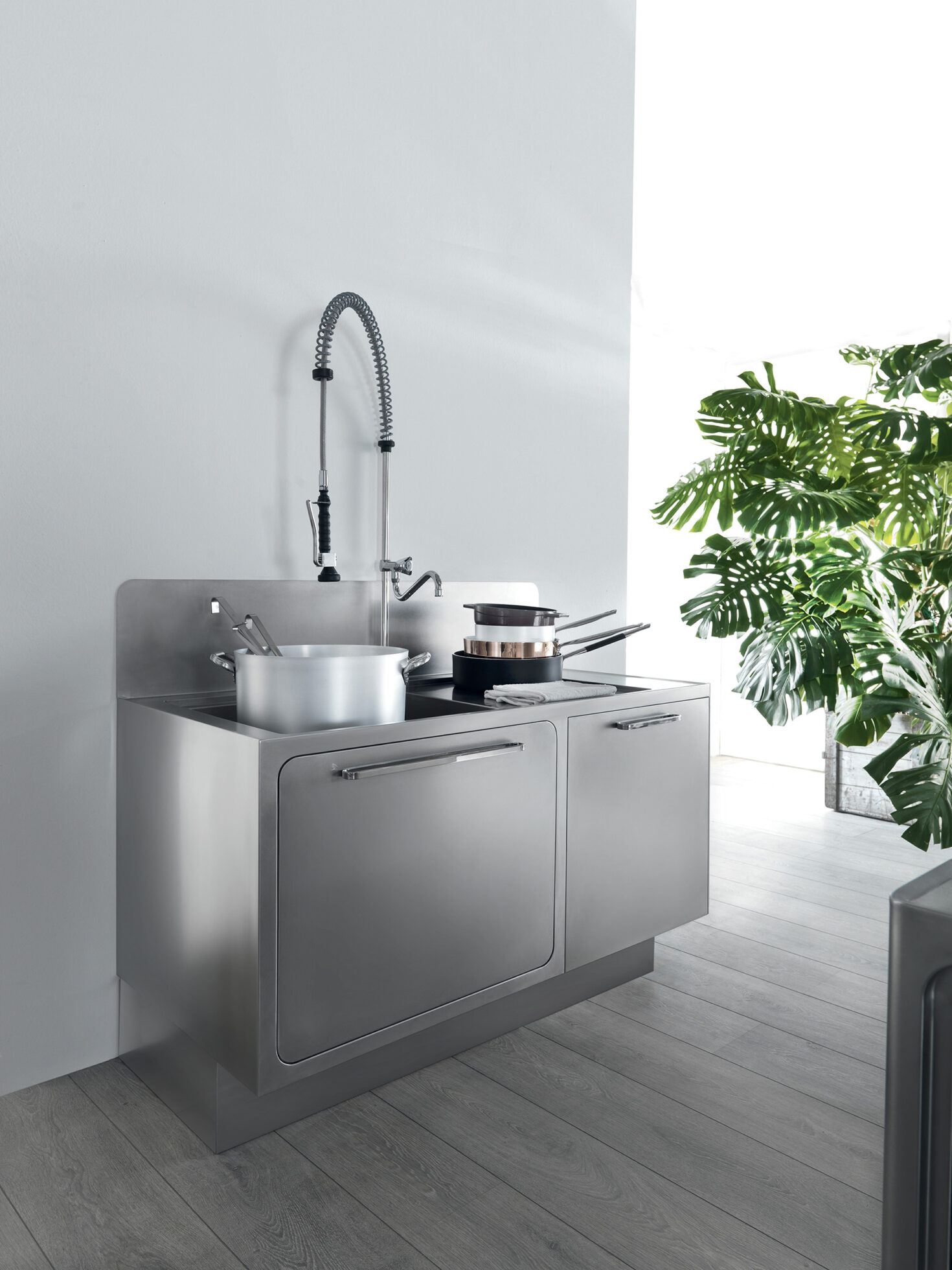
Care for raw materials and their storage, commitment to cleanliness and space optimization, the use of professional equipment, and taking initiative in organizing the workstation for a practical and functional workflow.
These are the qualities that define a true professional in the kitchen and, therefore, the right attitude to be able to cook like a chef. Passion and love for food imply an innate and completely natural predisposition toward the culinary art.