

The story of Abimis did not start with a business plan or a calculated boardroom strategy. Instead, it took shape through two decisive and unexpected episodes, almost accidental in nature, starring Silvano Ongaro, the historic founder of Prisma. These moments went on to change the company’s destiny forever.
In 2007, a senior executive from Turin, who was already a client and a connoisseur of Prisma’s professional catering kitchens, makes an unusual request of Silvano Ongaro.
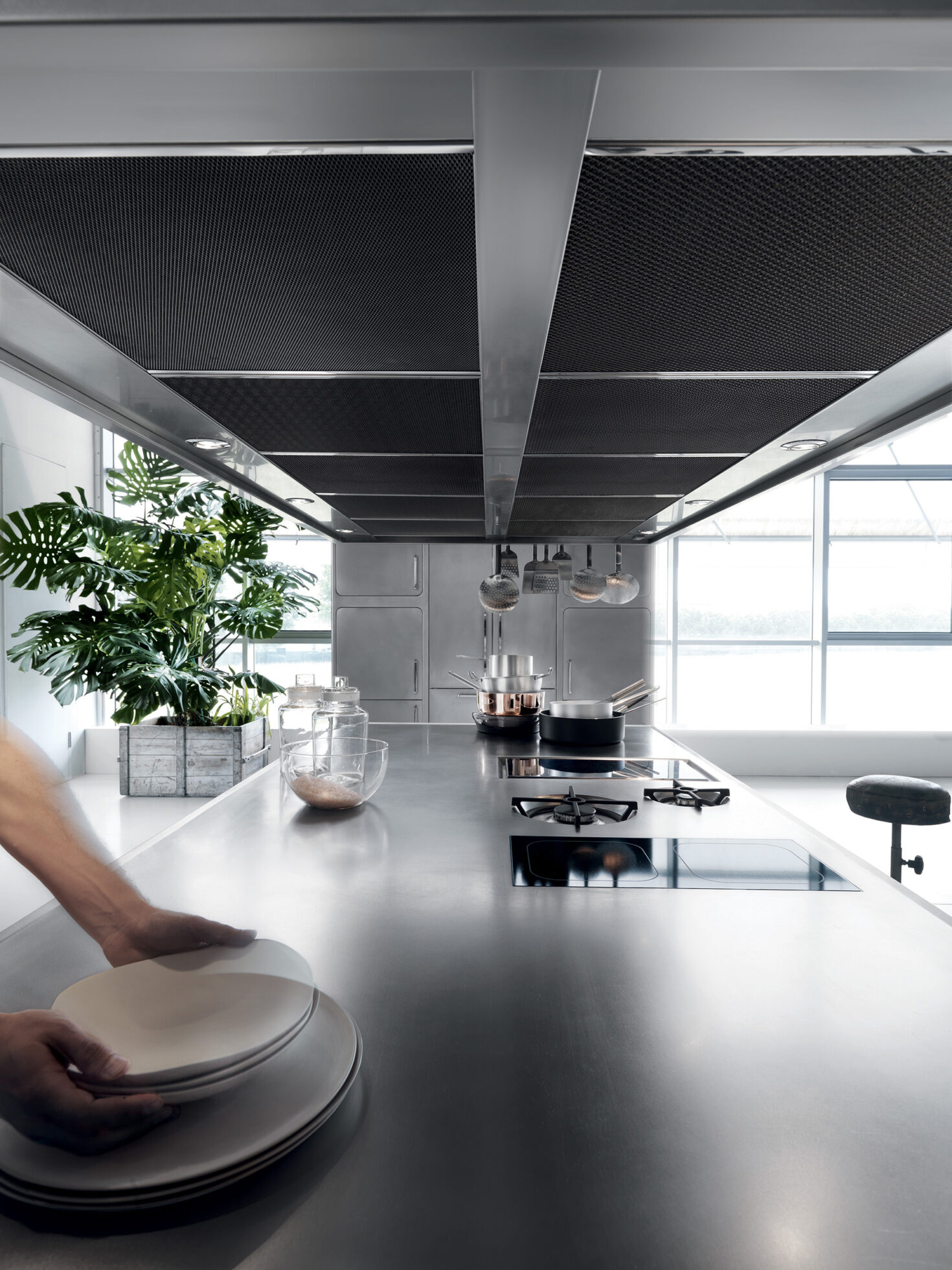
He desires a professional-grade stainless steel kitchen, similar to those found in high-end restaurants, but more compact, as it is destined for his offices at the Lingotto. But that’s not all: he wants it in Ferrari Red, a tribute to the Maranello-based car manufacturer with whom he has worked and remains deeply connected.
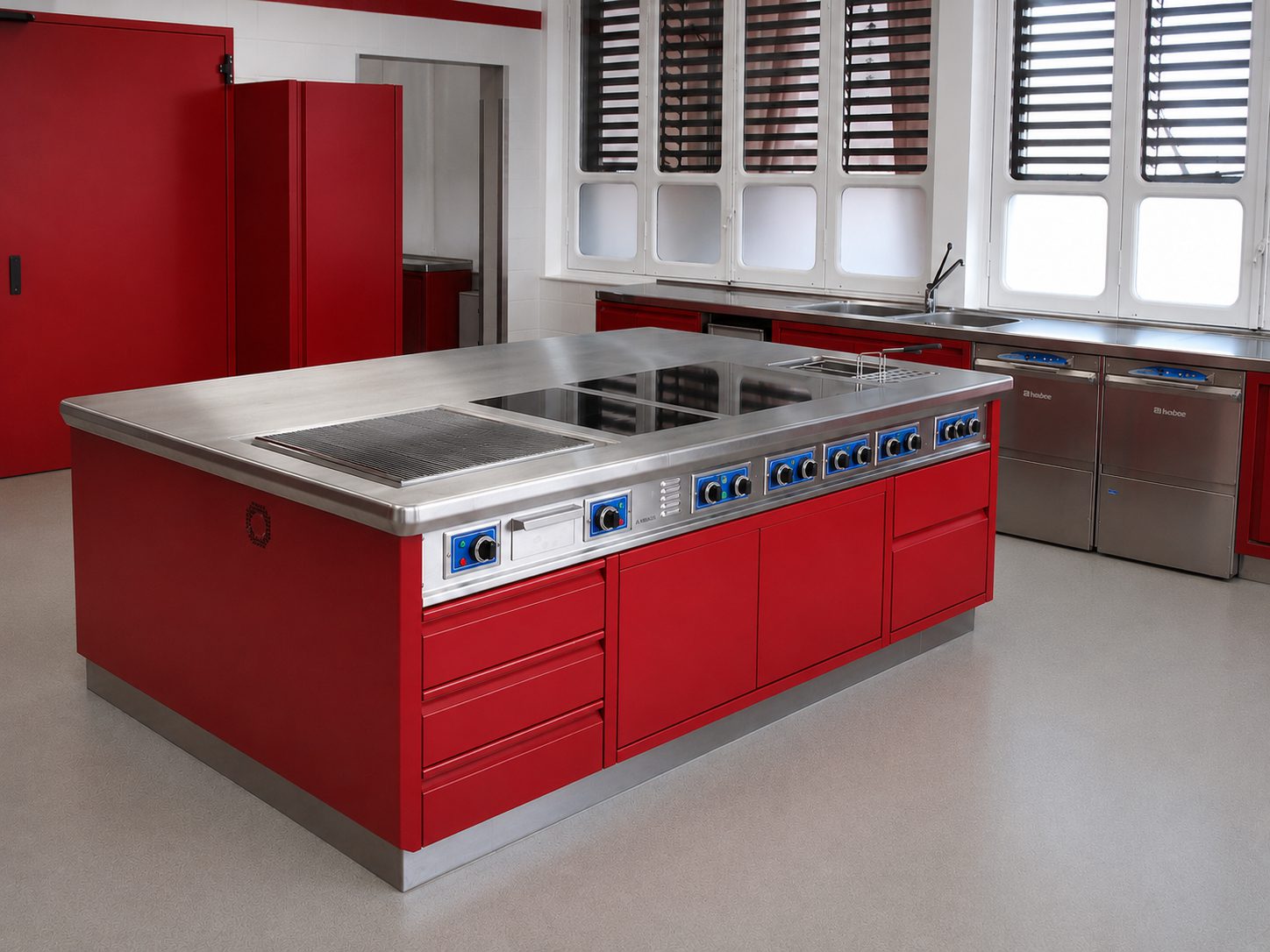
For Silvano Ongaro, this is a new challenge and, like all stimulating challenges, it must be accepted!
The second episode takes place some time later, around a table during a dinner in Treviso. The setting is a restaurant managed by a dear friend, also attended by the architect Alberto Torsello.
The conversation turns to cooking, recipes, design projects… Silvano Ongaro mentions that he has just created a new type of kitchen, different from any other: a professional-derived kitchen designed for an unconventional context.
Torsello listens and nods. He confirms that he receives similar requests from private clients more and more frequently.
It is not about a simple nod to industrial style or an exercise in aesthetics. “The market already offers many stainless steel kitchens”, he explains. He continues: “What is missing is an authentic, high-performance product, without compromise, and with a meticulously curated aesthetic”.
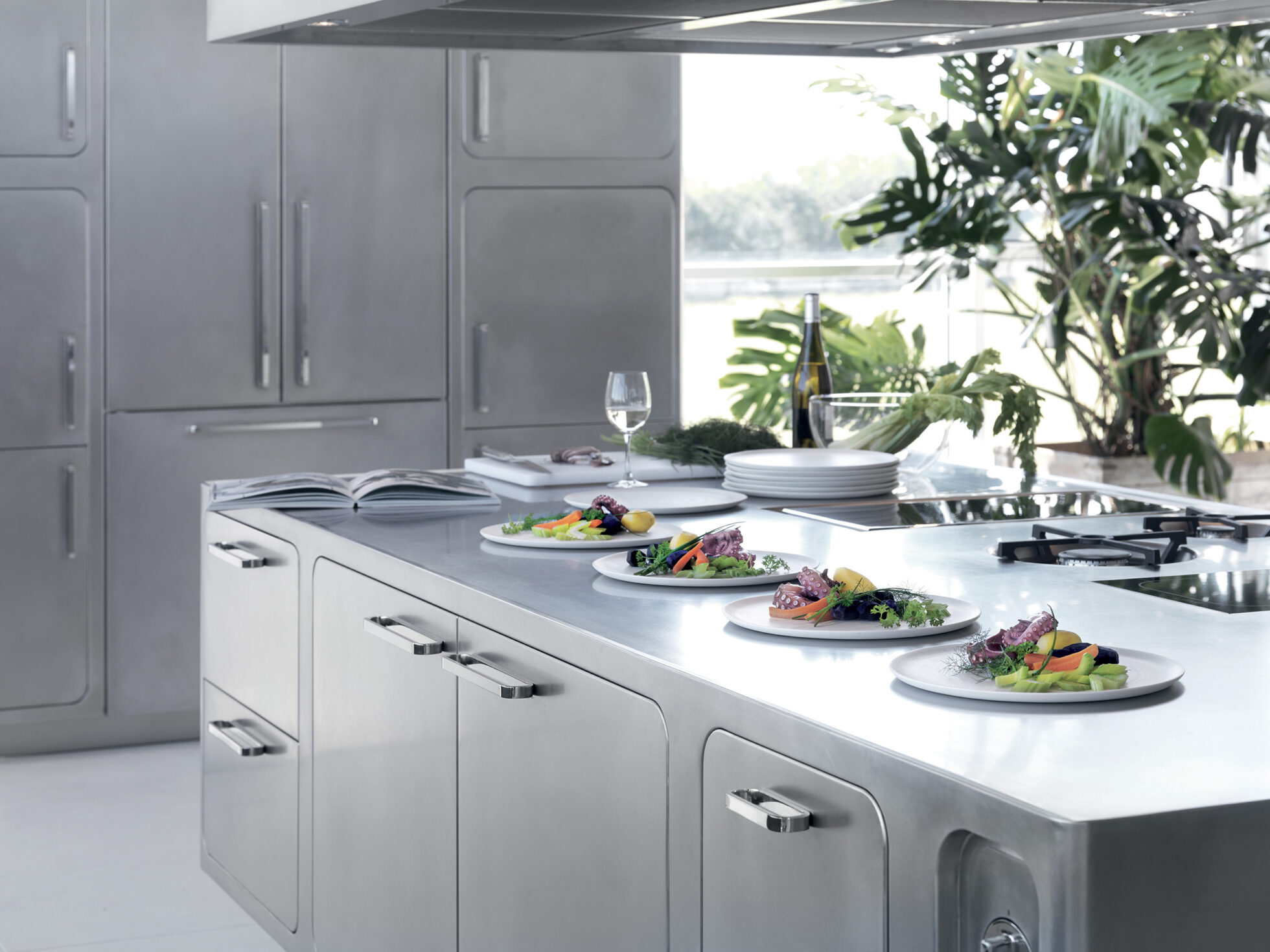
From these two chance encounters, it becomes clear that the boundary between professional and domestic kitchens can be crossed.
There is one condition, however: its foundations must never be betrayed. Functionality, quality, ergonomics, hygiene and ease of cleaning are paramount.
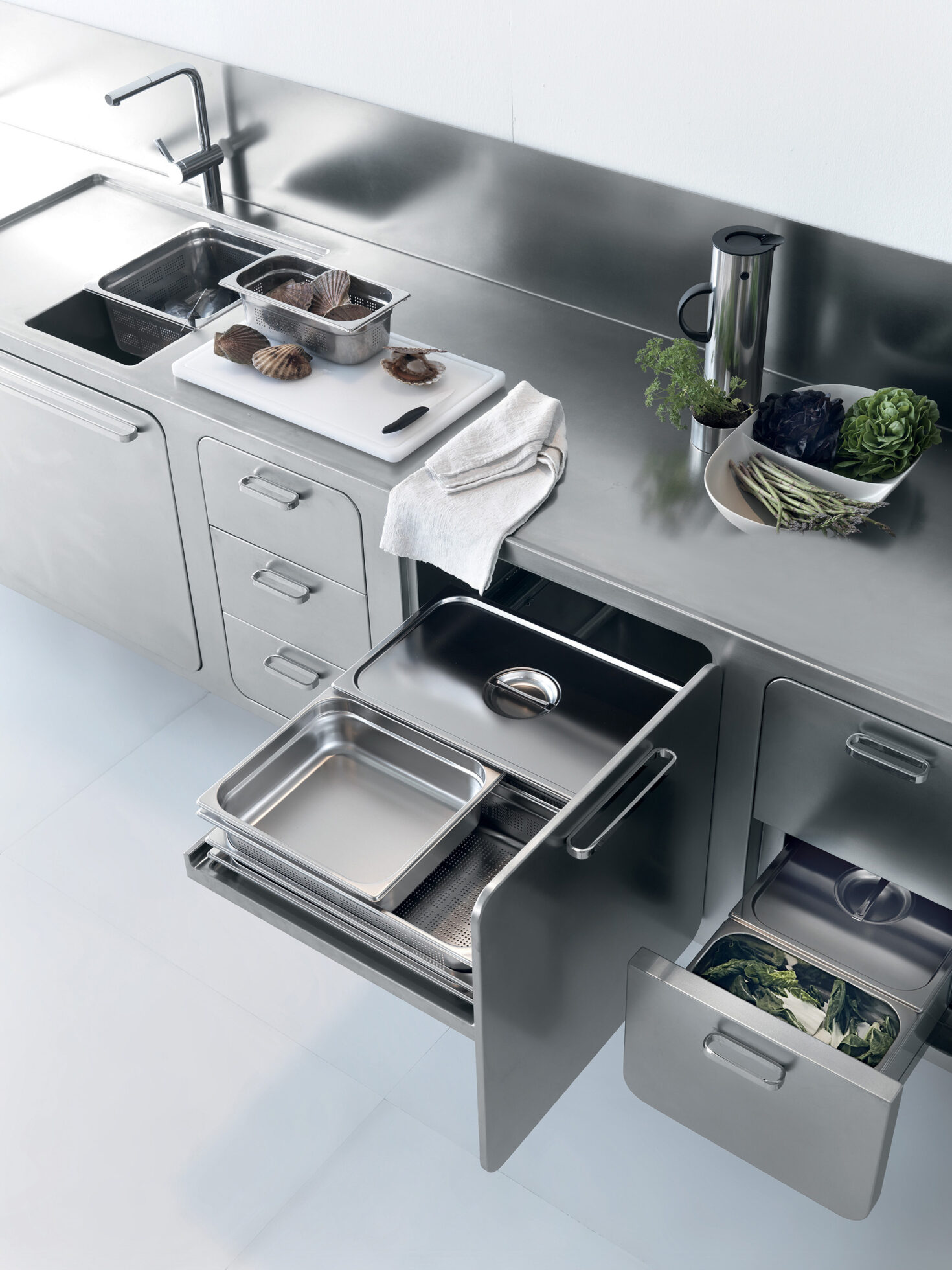
The true challenge is not to simplify the professional kitchen, but to bring its values into the domestic space, interpreting them with a new language. This is a language capable of engaging with interior design and contemporary living without ever sacrificing performance.
Silvano Ongaro is aware that intuition alone is not enough. A method is required.
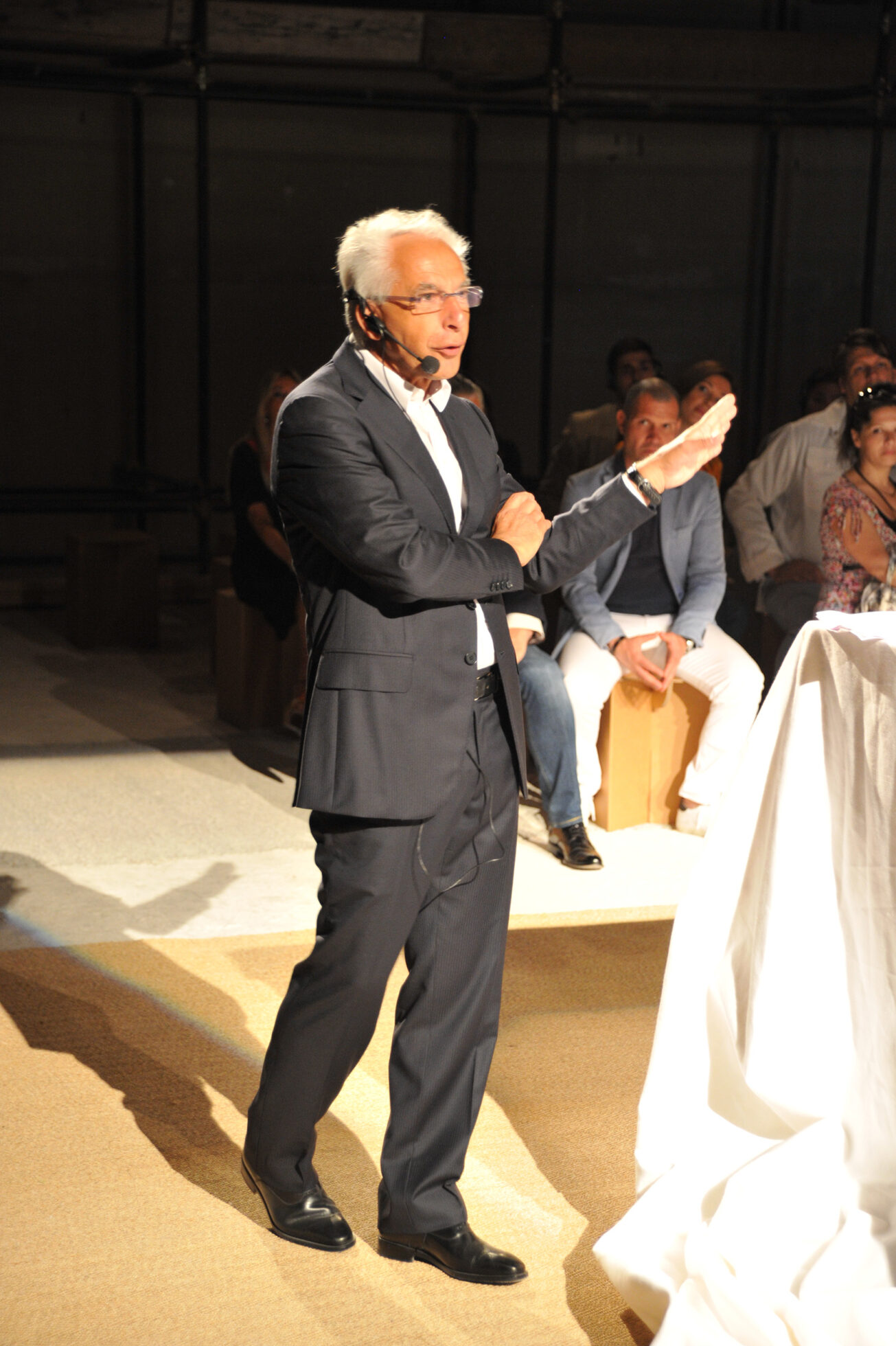
He organises a cross-functional and atypical work group: a designer, the architect Torsello, the Prisma team, a professional chef, and technology experts.
Diverse worlds are called to work together towards a single goal: to rethink the very idea of the domestic kitchen by returning it to its essence, starting from the act of cooking.
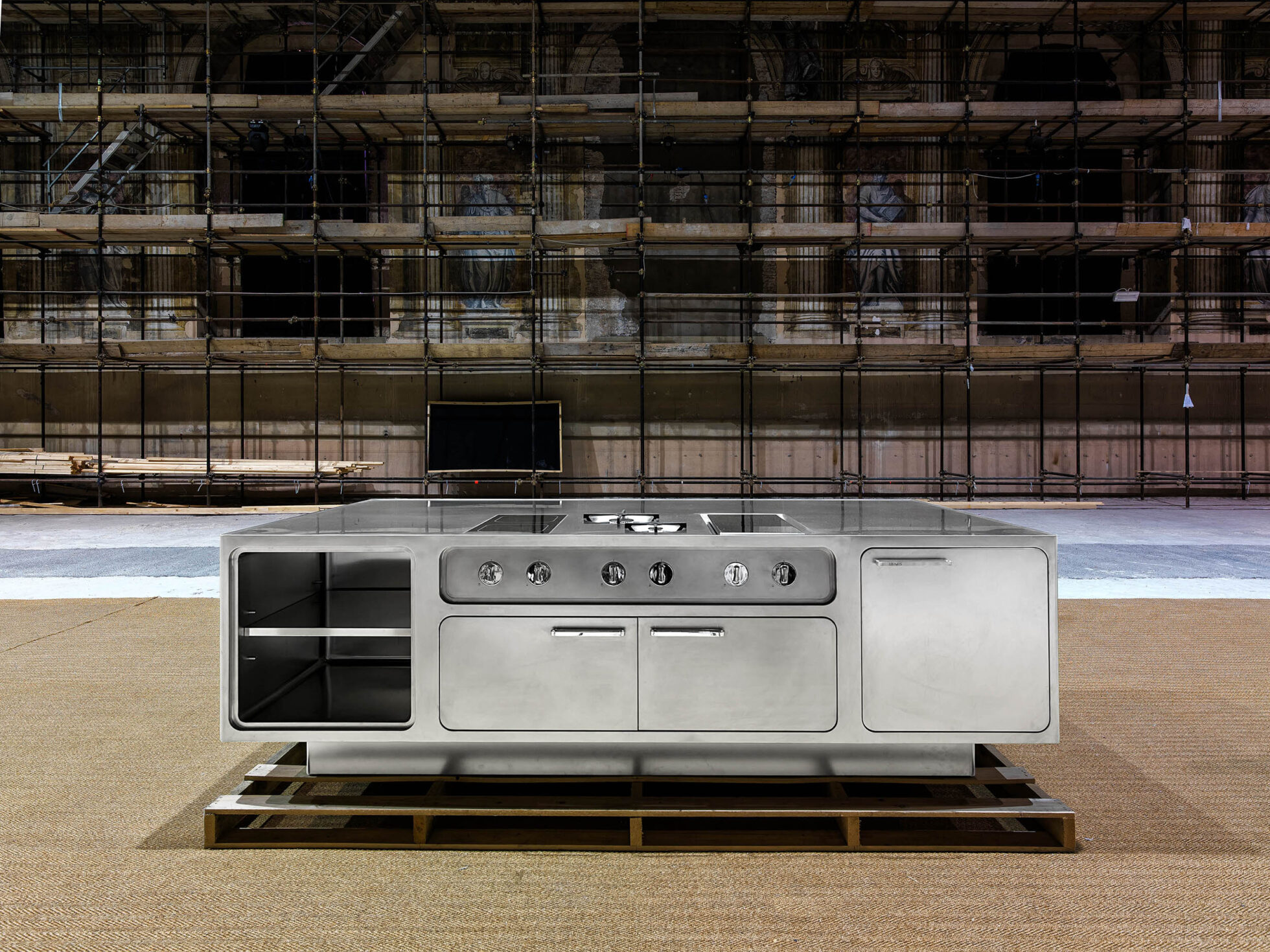
A kitchen based on gestures, timing, functions, and high performance, but with a silhouette suited to contemporary homes: in other words, a designer cooking machine. This is how Ego came to be: the first professional kitchen for domestic use.
The kitchen that never was, the idea from which everything takes shape.
It is from this challenge that Abimis officially takes shape.
It is not merely an extension of a product line, but an autonomous brand with a clear and radical philosophy.
Abimis is a brand born fully formed because it carries a great legacy from its inception: the strength, know-how and craftsmanship of Prisma. For over forty years, Prisma has worked with stainless steel in the world of professional catering, designing bespoke kitchens for restaurants of every level, many of them Michelin-starred.
This heritage of technical expertise, design culture and a profound understanding of professional cooking did not originate in the domestic market; it was transferred into it directly.
This continuity makes Abimis a fully formed brand: because Abimis does not experiment, it applies; it does not promise, it demonstrates.

Abimis, therefore, is rooted in design culture and skilful craftsmanship. From the very name it chooses, it declares its revolutionary nature: Ab imis fundamentis. From the deepest foundations.