

In the historic city centre of Milan, within an elegant 19th Century building in the heart of Brera, a couple of Neapolitan entrepreneurs chose to create their own “Milanese home”: a bright, welcoming retreat where the city’s hectic pace meets the warmth and sociability typical of Naples.
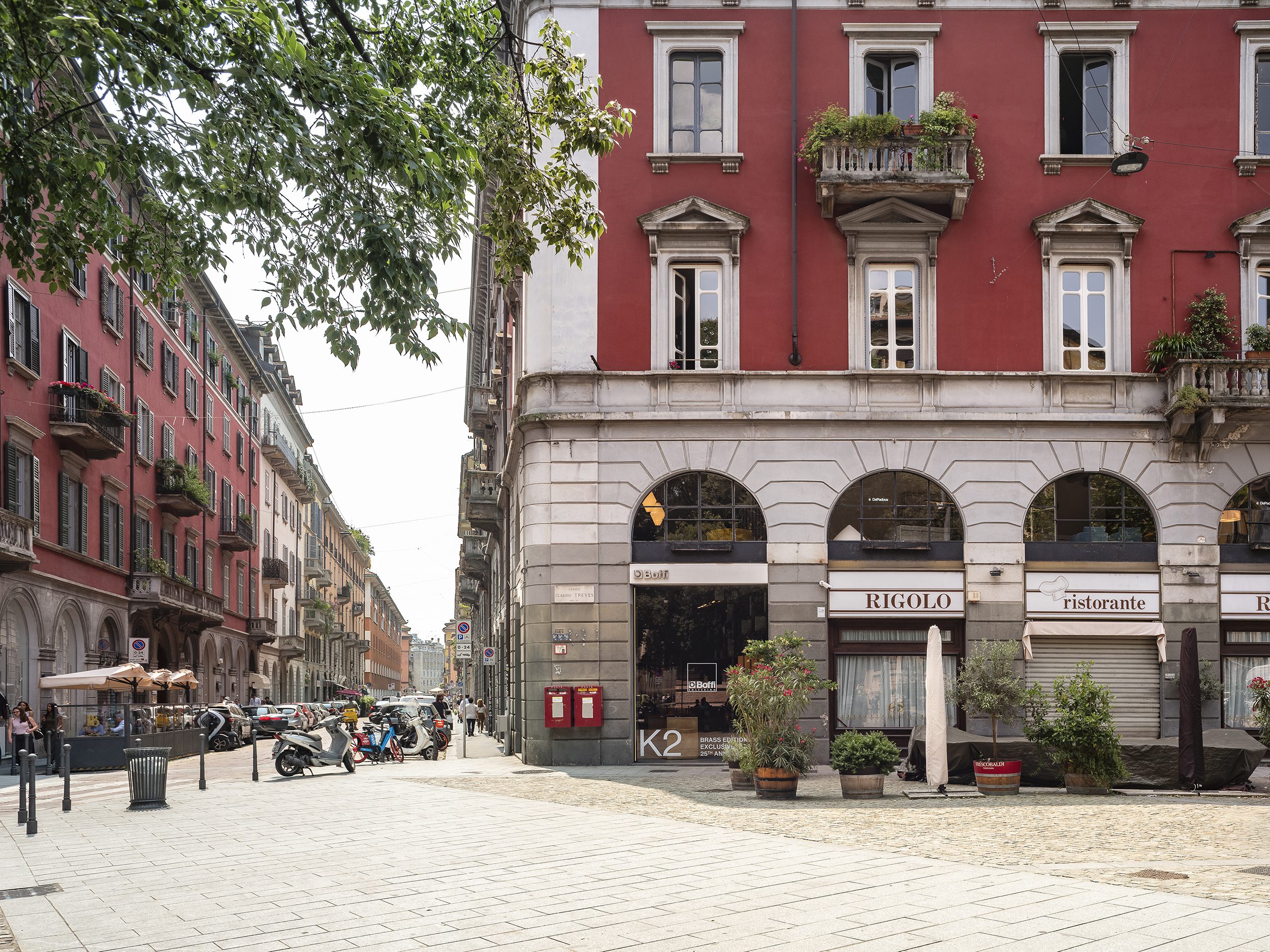
The apartment, located on the top floor, was completely renovated by architect Giuliano Andrea Dell’Uva, a friend of the couple. He skilfully wove together memory and modernity, respecting the historical character of the building – the frescoed ceilings and the antique coloured cement kitchen tiles – while adapting the spaces for a contemporary lifestyle.

“Being of Neapolitan origin, the kitchen is the heart of the home for us,” the owners told us.
This specific need is what prompted the design of this kitchen, conceived as a central, defining space. Architect Dell’Uva decided to combine two small, pre-existing rooms to create a single large, functional environment where light and sociability play the starring roles.
The new kitchen is structured around three volumes.

Along one wall, a full-height white block conceals the ovens, refrigerators, and larder, ensuring neatness and visual clarity.
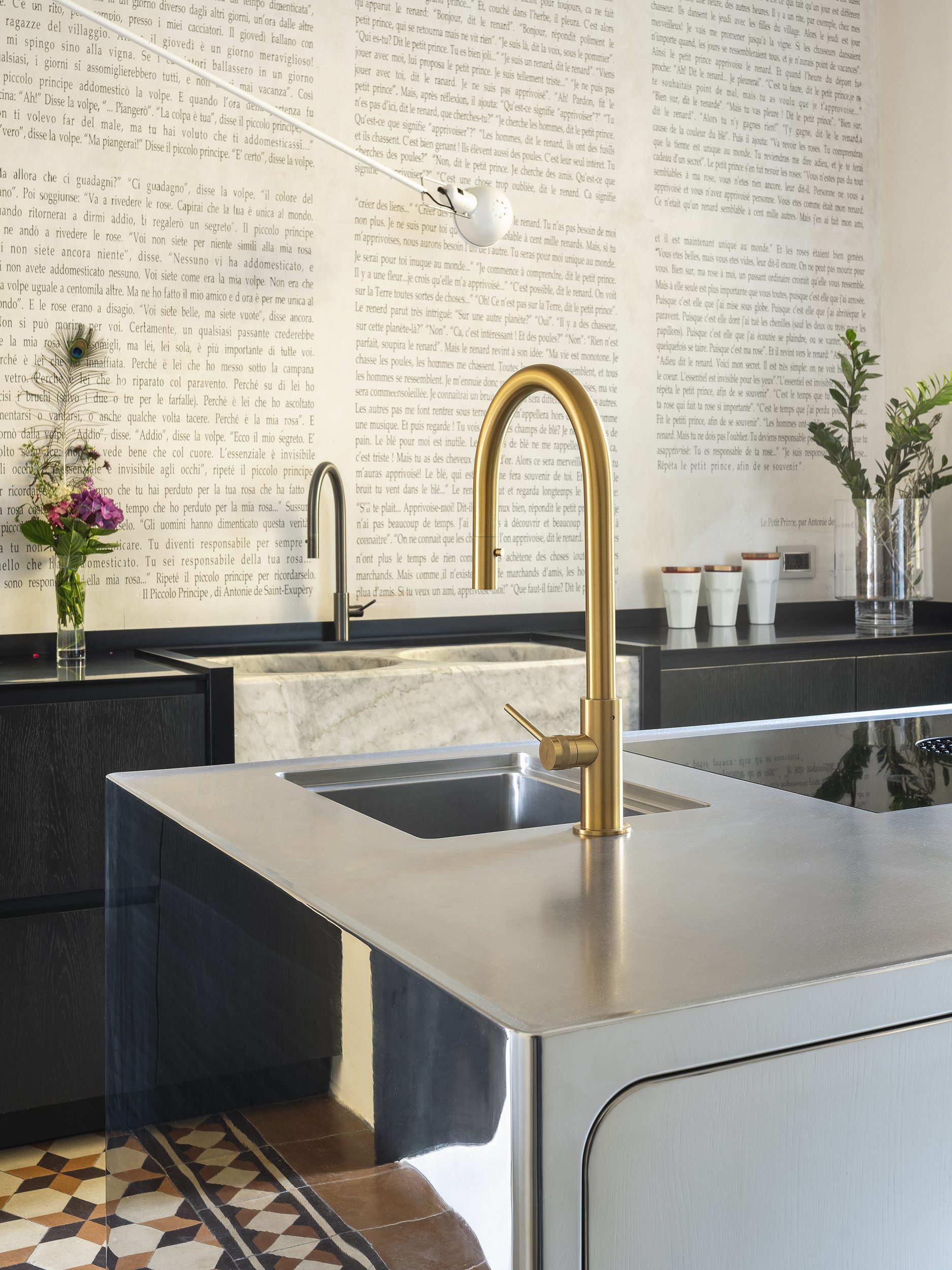
On the opposite side is the operational area: a low element in matt Bardiglio marble, sculpted from a single monolith, brings texture and rigour to the space. The contrast between the velvety texture of the marble and the dark finish of the stainless steel creates a balance of elegant simplicity.

On the back wall, wallpaper made from pages of Antoine de Saint-Exupéry’s The Little Prince, one of the owner’s favourite books, adds a poetic and personal touch to the room.
In the middle of the room, an island from the Ego by Abimis line in polished mirror-finish stainless steel serves as the visual and functional focal point.

The induction hob with an integrated hood and the second utility sink are seamlessly flush-mounted into the top, ensuring perfect aesthetic continuity.
The elegant, minimalist satin brass handles create a beautiful contrast with the mirror surface of the stainless steel and ensure an ergonomic, fingerprint-free grip.
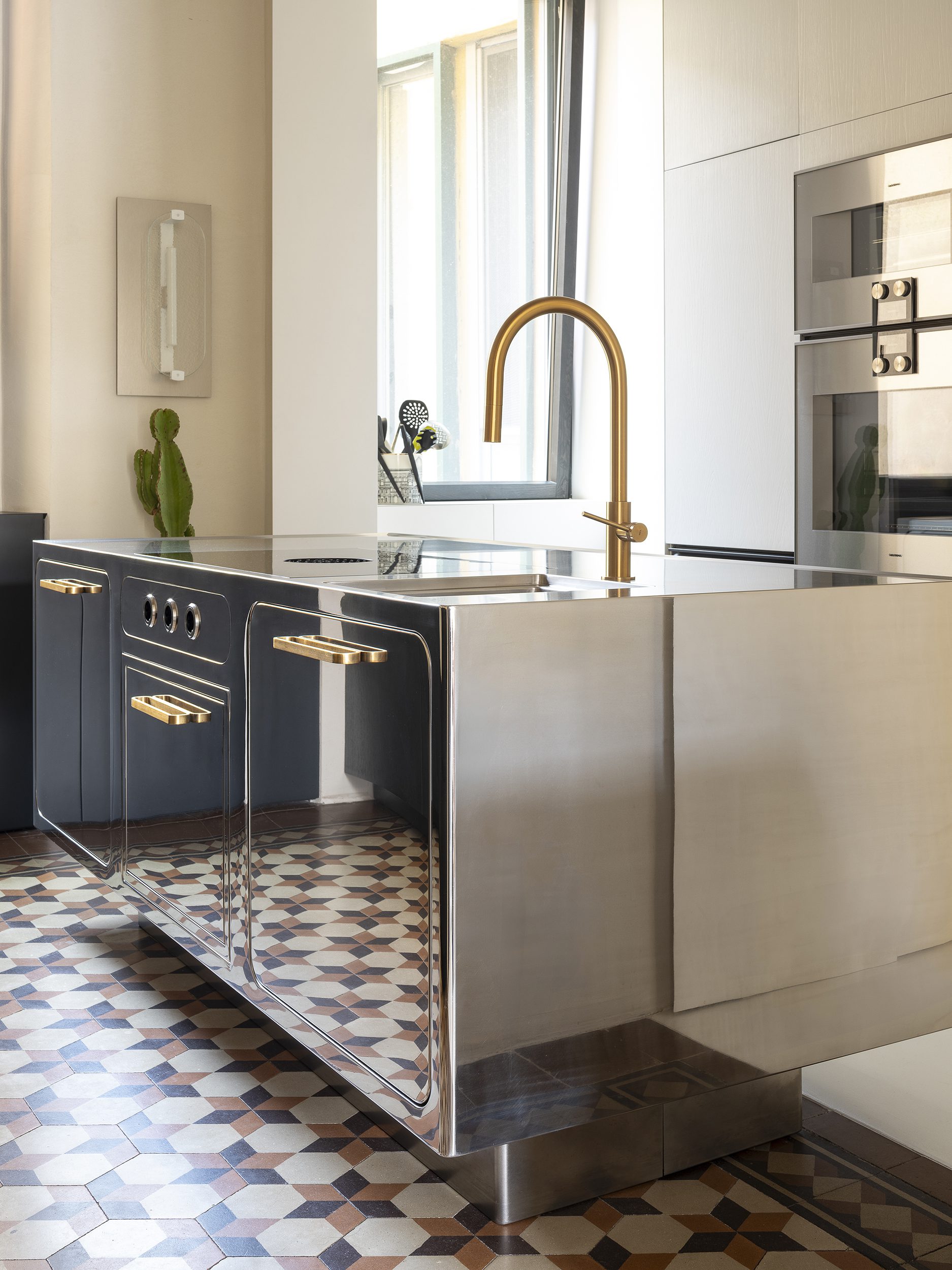
However, the real touch of class is the reflection of the coloured kitchen tiles. A deliberate effect sought by the designer, which amplifies the brightness of the space and visually lightens the volume of the monobloc: a play of reflections that literally makes the island “disappear” into the space.
Completing the design are several curvilinear shelves and the radiator covers beneath the windows in stainless steel, featuring the same matt finish as the operational block; these were also custom-made by Abimis according to the designer’s specifications.
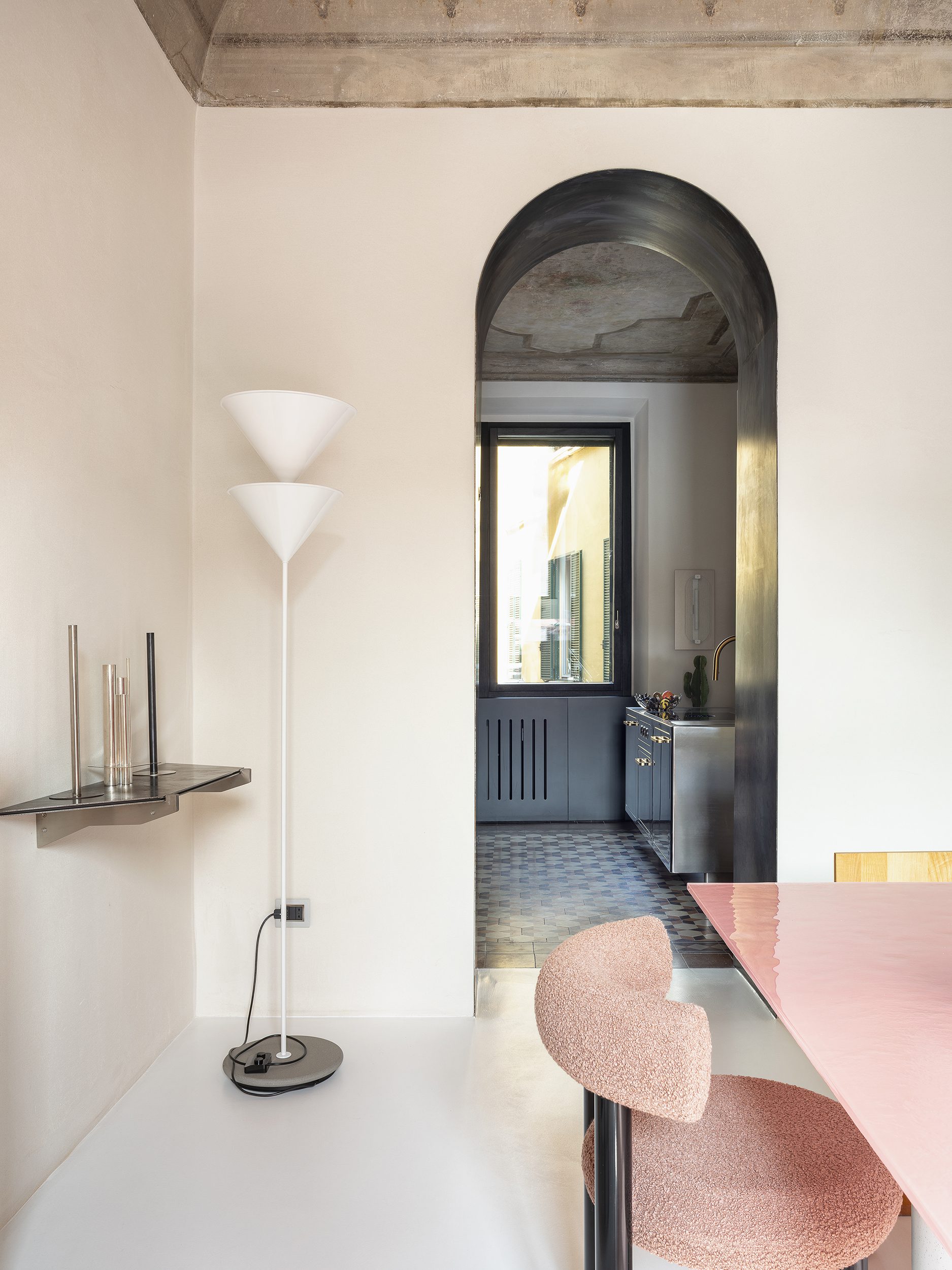
An arch carved into the load-bearing wall connects the kitchen to the dining room, promoting visual and functional continuity between the areas. This solution was specifically designed to share memories, flavours, and conversations in an open and sociable space.
See also Giuliano Dell’Uva’s kitchen in Naples, created by Abimis.
This project fully reflects the philosophy of the Neapolitan architect, who brings together architectural rigour with artistic sensitivity in his work. It once again confirms the affinity between Giuliano Dell’Uva and Abimis, who have completed several projects together, and the Venetian company’s ability to follow the designer’s vision in the finest detail. This is possible thanks to their extensive technical know-how and the exceptionally high level of craftsmanship in processing stainless steel kitchens.
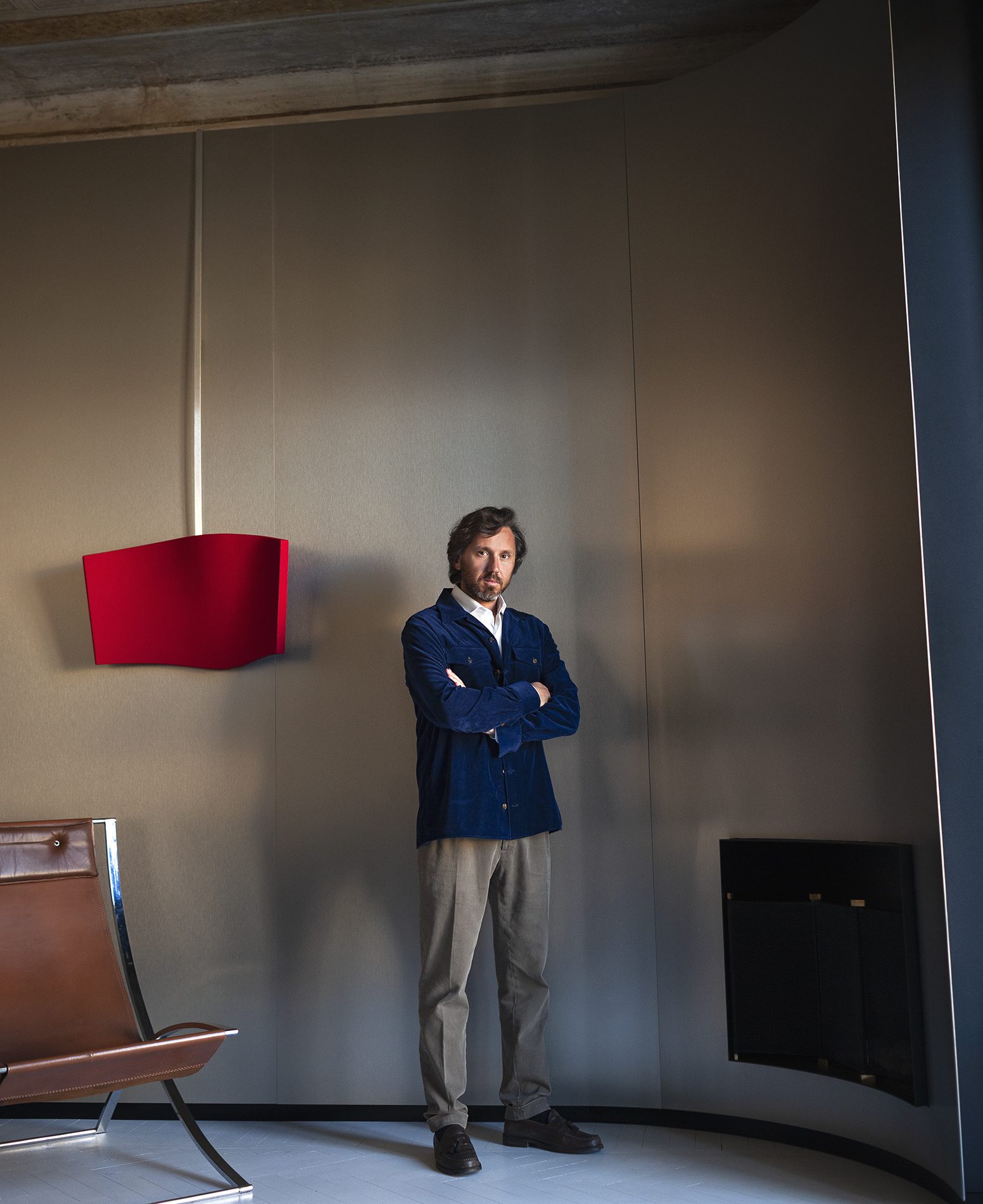
“Abimis grants me absolute freedom,” Giuliano Dell’Uva confesses. “An Abimis kitchen is part of the stylistic project of the setting, yet it possesses great solidity. And the customers’ satisfaction confirms it.”

In this Milanese home, suspended between two cities and two cultures, the kitchen thus becomes a statement of style and identity: a place where the precision of design meets the warmth of domestic life, where Milan converses with Naples through light, materials, and the art of fine living.
See also Giuliano Dell’Uva’s kitchen in Lecce, created by Abimis.